


 Nederlands
 Deutsch


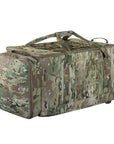
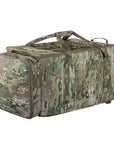
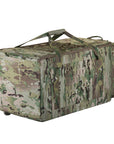
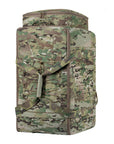
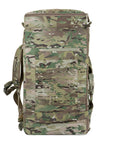
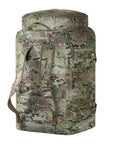
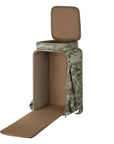
Backpack bag for FPV 7 drones (without shelves) Laser Cut
€315,95
Direct leverbaar
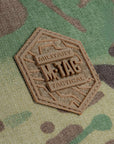
Modern war needs modern solutions. Today the Ukrainian military actively uses FPV drones to destroy enemy equipment and manpower. There is a need for convenient and safe transportation of these "ferocious birds». M-Tac has developed and released the M-TAC BAG-BACKPACK FOR FPV 7'' DRONES LIGHTWEIGHT (WITHOUT COMPARTMENTS) MULTICAM designed for safe storage and transportation of FPV drones. The main compartment opens like a suitcase and is divided into separate sections for the convenient storage of seven drones. If you remove the internal compartments, the backpack can store15 drones without batteries. At the top of the backpack the designers have added a special compartment for additional devices: remote control, batteries, glasses, cables, etc. On the sides, the product is equipped with a MOLLE Laser Cut system, which is made of Cordura Squadron and allows you to attach additional equipment. On the front of the backpack there is a lacing made of elastic cord with a fastener, which makes it possible to carry a jacket, camouflage net or similar items. The Velcro panel is for your favorite IDs and patches. The backpack is made of Cordura 500D and Cordura 1000D - a high-quality and wear-resistant material that will provide protection against mechanical damage and a long service life. The walls of the backpack and internal compartments are made of polymer material - EVA foam, which protects the drones well from damage during transportation. The shoulder straps are equipped with a quick release system. Additional handles on both sides and on the top allow you to carry the backpack either horizontally or vertically. This backpack from M-Tac is an excellent choice for highly effective protection of drones, their reliable storage and convenient transportation. Material: Cordura 500D, Cordura 1000D; Hardware: Woojin Zippers: YKK (Japan) Dimensions: main section – 68 x 38 x 38 cm upper pocket – 33 x 37 x 10 cm. Capacity: 110l Camouflage "MULTICAM" was developed by the American company Crye Precision in collaboration with the U.S. Army Soldier Systems Center, commonly known as the U.S. Army Natick Labs. Creating the MULTICAM pattern took over eight years of expeditions, scientific research, data analysis, and practical field tests. It was designed to serve as a universal camouflage solution for the American army. The need for a new camouflage became evident after Operation Desert Storm in Iraq. At the time, the camouflage patterns in use, such as Woodland for forest terrain and Tri-Color Desert for desert operations, failed to provide adequate concealment for soldiers. Each operation still required specialized camouflage, complicating supply logistics and decreasing soldier safety. Even after introducing a new universal digital camouflage (Digital) during operations in Afghanistan and Iraq, the situation did not significantly improve. It became clear that a single universal pattern was necessary, one that would allow a soldier to blend into any terrain and at any distance from an observer. The goal was to create camouflage that worked equally well against various backgrounds, including vegetation, desert, rocky terrain, urban buildings, and ruins, under different lighting conditions and in any climate throughout the year. How does this camouflage work? It seemed almost impossible to achieve such a versatile pattern. However, the designers utilized the limitations of human vision and the structure of our eyes to their advantage. In theory, for camouflage to be effective at long distances, it should consist of large, blurred spots. At closer ranges, especially against backgrounds of foliage and vegetation where the human eye detects small objects more clearly, the pattern should incorporate small, rounded elements of the dominant background. The developers found that the predominant backgrounds across most regions of the globe share similar gradients of green and brown. An important revelation was that black, which is commonly used in camouflage patterns worldwide, does not actually appear in nature. By integrating their findings and conducting computer simulations that layered over a thousand images, the developers successfully created the MULTICAM pattern. Near Infrared (NIR) technology is utilized by the US Department of Defense to minimize detection by NIR electro-optical sensors. These sensors do not detect infrared radiation. NIR uniforms are made from a special fabric that helps soldiers maintain a temperature similar to that of the surrounding landscape, making them harder to spot. Additionally, NIR technology reduces light reflection, making the uniforms less visible in low-light conditions
| Brand | M-TAC |
| Product code | 10265208 |
| Material | Cordura 500D, Cordura 1000D; |
Estimated shipping times vary depending on your location and the shipping method chosen. Once your order has been shipped, you will receive a shipping confirmation with tracking information, allowing you to monitor the progress of your delivery.
We aim to process your order within 2-5 business days, unless otherwise stated.
Secure payment — Encrypted checkout via iDEAL & credit card
Personal advice — Our specialists are here to help
Top brands & quality — Selected for reliability